
I am Ramiro Rovira. I work in fashion, eyewear, product design and brand building from a simple idea: an object can be small and still completely change the way a person presents themselves to the world.
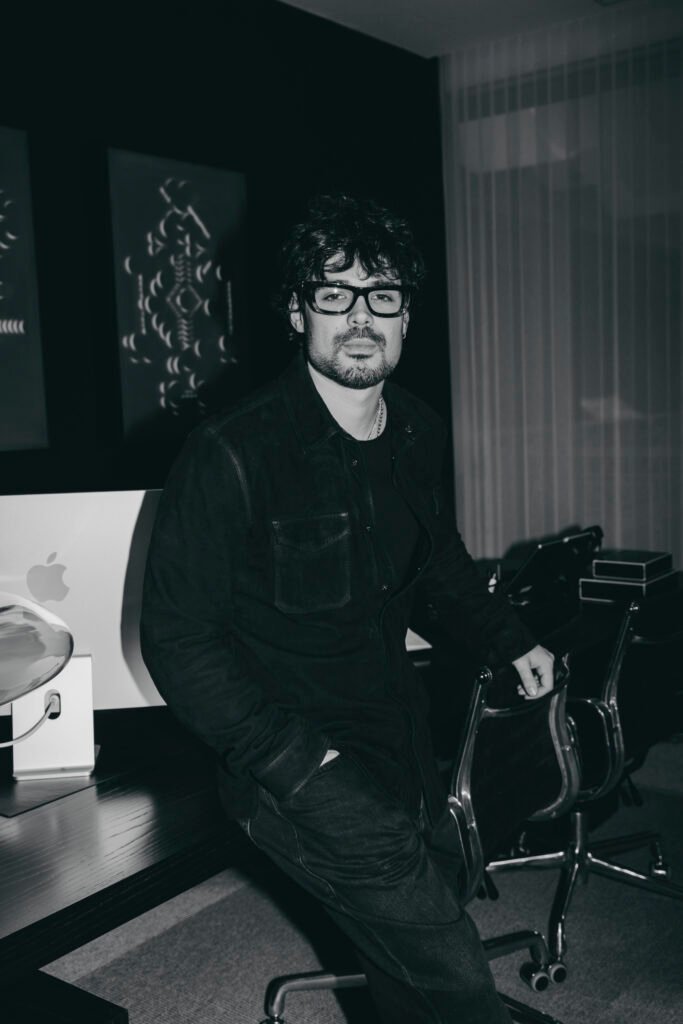
My path is linked to Dignos, a brand that grows around eyewear, clothing, accessories and a very concrete way of understanding style. I am not interested in thinking about fashion as a succession of fast trends. I am interested in building pieces, images and experiences with character, that can be recognized and that sustain their own identity over time.
Fashion begins with people and is confirmed in the product. A pair of glasses is not only a frame. It is proportion, material, weight, color, lens, gesture, photography, use and context. It is a visible decision. That is why eyewear interests me especially: it concentrates design, technique and identity in an object that lives on the face.
When I work on a piece or a collection, I think about how it looks, but also about how it feels, how it communicates and what place it occupies within a brand universe. Aesthetics cannot be separated from quality. Image cannot cover a weak product. And technology makes no sense if it does not improve a real experience.
Dignos was born with a clear search: to bring together design, limited production, quality materials and a contemporary reading of luxury. I like to think of the brand as a system, not as a sum of products. Glasses are a very strong starting point, but around them appear other categories, other textures and other modes of expression.
The goal is not to produce by volume or chase every passing trend. I prefer to work with pieces that can sustain a conversation: through their silhouette, their finishes, the way they appear in a campaign or the way someone incorporates them into daily life.
Limited production is part of that perspective. I do not understand it only as exclusivity, but as a way of caring for the process, observing each decision more carefully and preventing the brand from losing precision. A young brand needs speed, but it also needs criteria. If everything accelerates without direction, identity becomes diluted.
Artificial intelligence interests me as a working tool and as a cultural change. I do not see it as a replacement for creative intuition, but as a way to organize information, detect signals, optimize processes and make better decisions. In fashion, this can be applied to visual research, trend analysis, communication, shopping experience and behavioral reading.
I also believe data matters. A brand can have a very strong aesthetic sensitivity, but if it does not learn to read concrete information, it loses opportunities. Numbers do not replace taste or vision, but they help separate a real signal from a passing impression.
What interests me most about technology is its ability to bring ideas closer to execution. It allows testing, correcting, measuring, comparing and visualizing possible paths with greater speed. But the criteria remain human. The tool can open doors; direction is defined by a point of view.
I care about perceived quality. That thing the customer sometimes does not name technically, but recognizes immediately: a frame that feels solid, a clean finish, a well-chosen lens, careful packaging, a photograph that shows the product honestly. Everything communicates.
In eyewear, details are especially visible. Acetate, metal, transparency, the bridge, the thickness of the frame and the color of the lens all modify the reading of a person. That is why design cannot be decorative. It has to have intention.
The brand experience is also part of the product. A brand space, a website, a campaign, a video, a technical sheet or an editorial publication can reinforce the same idea or break it. My work is to care for that coherence: that the visual, the commercial and the cultural strengthen one another.
My training and curiosity led me to look at markets, cities, consumer habits and forms of communication beyond the immediate environment. I am interested in brands that understand their origin, but do not remain locked inside it. Today any creative project can enter into dialogue with global references if it has product, identity and a clear strategy.
That is why I closely observe what is happening in eyewear, technology, music, retail, digital commerce and visual culture. The brands that grow are not the ones that copy external signals, but the ones that learn to translate them into their own language.
This site is my editorial archive. A place to organize ideas about fashion, eyewear, artificial intelligence, design, consumption, materials, campaigns and the future of young brands. I do not think of it as a catalogue or as a product showcase. I think of it as a professional logbook: a way of looking, selecting and sharing topics that run through my work.
I am interested in writing and publishing about what is changing in the industry: how new technologies are adopted, what the consumer expects, why a pair of glasses can define an aesthetic, how visual trust is built and which decisions separate a brand with identity from a brand that only follows the noise.
If I had to summarize my approach, I would say this: product with character, image with criteria, technology with usefulness and brand with a recognizable voice. That is the territory from which I work and from which I want to continue building.